The Reliable Resource for Impartial Product Insights

Best 5 Bone Conduction Headphones of 2026 for Running, Cycling and Swimming

Owen Carter
By Owen Carter – Research Specialist
Owen Carter is a research specialist at CompareLoft. He builds each guide by comparing manufacturer specifications, safety listings, warranty terms and patterns in verified buyer reviews. CompareLoft does not lab-test products; scores are editorial judgments based on that research. How we review
Updated October 2026

Bone conduction headphones sit in front of your ears instead of inside them. Small transducers rest on your cheekbones and send vibrations that you perceive as sound, which leaves your ear canals open. For runners on busy roads, cyclists sharing lanes with traffic and anyone who dislikes the plugged-up feeling of earbuds, that open design is the whole point: you can listen to a podcast and still hear a car approaching or a training partner calling out.

To choose the five models below, we compared manufacturer specifications, water resistance ratings, battery claims, warranty terms and recurring patterns in verified buyer reviews on Amazon and brand websites. We did not run our own audio lab measurements. Our scores are editorial judgments that weigh how each set is designed against what typical buyers say about fit, comfort and long-term reliability.

The category has matured quickly. Shokz, the brand most people associate with bone conduction, now offers sets that blend bone and air conduction for fuller bass, while Suunto and H2O Audio have brought rugged, sport-specific designs to market. Swimmers have their own subcategory, because Bluetooth does not travel well through water and swim models rely on built-in music storage instead.

Our top pick is the Shokz OpenRun Pro 2, which delivers the most complete package for everyday training. If you spend long hours outdoors or run in the dark, the Suunto Wing adds safety lights and a portable power bank, and swimmers should look closely at the Shokz OpenSwim Pro.


Our Evaluation Standards


Sound quality and volume

Bone conduction will never match a good pair of sealed earbuds for bass, so we compared driver designs, EQ options and buyer feedback on clarity at moderate volumes and in windy or noisy environments.

Battery life and charging

We looked at rated playback time, quick-charge claims and the type of charger. Proprietary magnetic connectors are common in this category, so we noted which models use standard USB-C.

Water and sweat resistance

IP ratings tell you how well each set handles sweat, rain and submersion. IP55 is fine for sweaty runs, while IP67 and IP68 or IPX8 ratings matter if you swim, paddle or train in heavy rain.

Fit, comfort and controls

A secure, lightweight wraparound band that works with sunglasses and helmets is essential. We also considered available sizes, button placement and features such as head-movement controls and onboard storage.

#1 TOP PICK
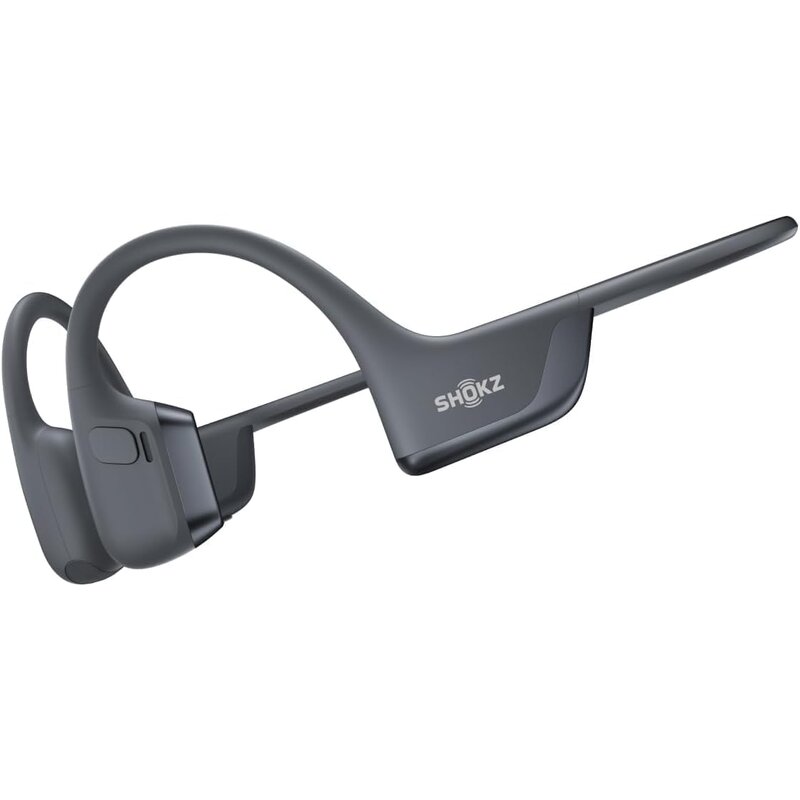
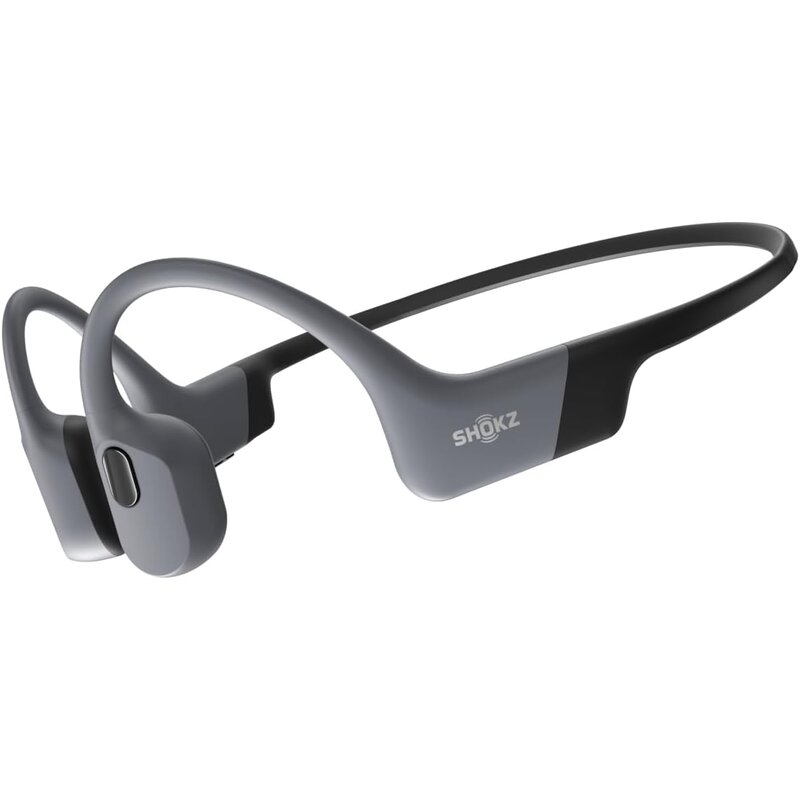
Shokz OpenRun Pro 2
Image courtesy of Shokz

Shokz OpenRun Pro 2

from Shokz
Rating
9.5 / 10
★★★★★
Sound Quality
94%
Battery Life
90%
Water Resistance
78%
Comfort & Fit
92%
Value
88%

The Shokz OpenRun Pro 2 is Shokz's flagship sport model, and its biggest change is the DualPitch driver system. A bone conduction transducer handles mids and highs while a separate air conduction driver adds low-frequency punch, giving it fuller bass than older bone conduction designs. That addresses the thin sound that has long been the main complaint about this style of headphone. 🎧

Buyer feedback consistently points to fuller music playback than earlier Shokz models. The Shokz app adds EQ presets and custom modes, so you can tune the sound for podcasts, music or calls, and dual microphones with noise reduction help keep your voice clear when you take a call on the move. Switching between EQ presets is an easy way to match the sound to whatever you are listening to.

Battery life is rated at up to 12 hours, enough for several training sessions or a long race day, and the set charges over standard USB-C instead of a proprietary magnetic cable, so the same cable that charges a phone usually works. That is one less dedicated cable to remember when you pack for a trip or a race weekend. 🔋

The open-ear design suits runners, cyclists and commuters who want music while still hearing what is around them. The wraparound band uses a flexible nickel-titanium wire and comes in Standard and Mini sizes, which matters because a loose band is one of the most common reasons bone conduction headphones feel uncomfortable or leak sound. Picking the right size helps keep the transducers seated on your cheekbones during fast runs and bumpy rides.

Within this guide, it is the most balanced choice for land training. The Suunto Wing adds safety lights, a power bank and IP67 protection but has less bass, the OpenSwim Pro and H2O Audio TRI 2 PRO are built for the pool, and the Shokz OpenMove offers half the battery life and only one size. For training that happens on roads, trails and bike paths rather than in the pool, it is the set we would start with.

The main limitation is water protection. IP55 covers sweat and rain but not swimming, so triathletes and pool users should look at the OpenSwim Pro or TRI 2 PRO instead. As with all bone conduction sets, some sound escapes at high volume, which can be noticeable in a quiet office or library. Shokz includes a two-year warranty, longer than many sport headphones offer. 🏃

Key Specifications
Battery lifeUp to 12 hours
DriversDualPitch bone conduction plus air conduction
Water resistanceIP55
SizesStandard and Mini
ChargingUSB-C
Warranty2 years

Pros
  • DualPitch drivers deliver fuller bass than older bone conduction designs
  • Up to 12 hours of battery life
  • Charges with a standard USB-C cable
  • Available in Standard and Mini sizes
  • Flexible nickel-titanium wraparound band
  • Open-ear design keeps you aware of your surroundings
  • Noise-reducing dual microphones for calls
  • Shokz app with EQ presets and custom modes
  • Two-year warranty
Cons
  • IP55 rating is not suitable for swimming
  • Some sound leakage at high volumes
Wrap-Up

The Shokz OpenRun Pro 2 is the best all-around choice for runners and everyday athletes. Its DualPitch drivers deliver fuller bass than older bone conduction designs, and up to 12 hours of battery life, standard USB-C charging and Standard and Mini sizes make it easy to live with.
PICK #2
Suunto Wing
Image courtesy of Suunto

Suunto Wing

from Suunto
Rating
9.2 / 10
★★★★★
Sound Quality
86%
Battery Life
96%
Water Resistance
90%
Comfort & Fit
88%
Value
86%

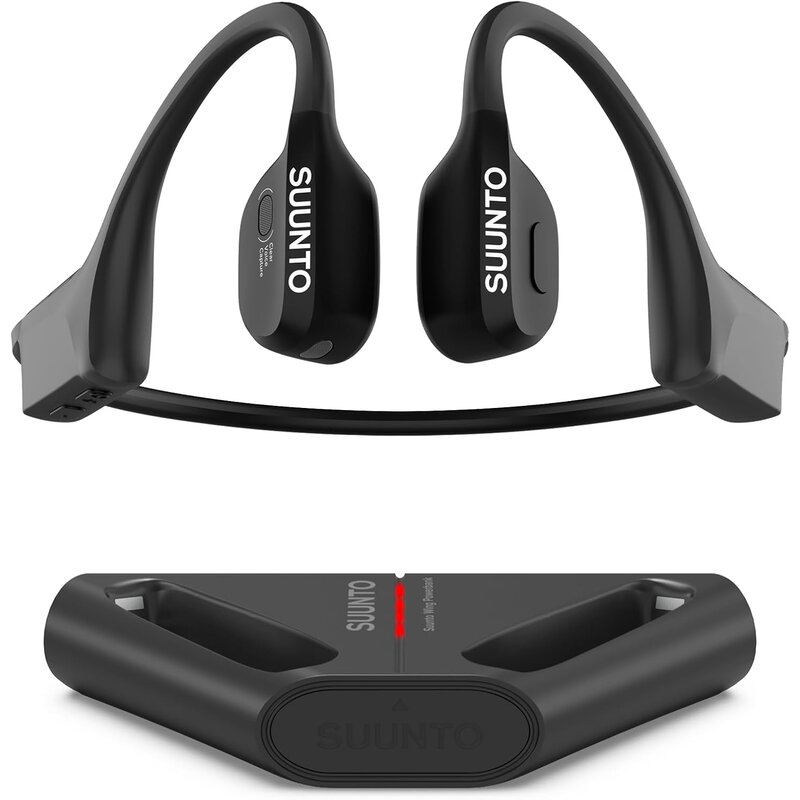
Suunto, best known for GPS sports watches, built the Suunto Wing for athletes who train early, late and in rough weather. LED lights on each side of the band can glow steadily, flash or signal SOS, making you more visible on dark roads and trails, and you can change light modes in the Suunto app.

Head-movement controls let you answer or reject calls with a nod or shake, handy when you are wearing gloves, and physical buttons cover everything else. Dual microphones are designed for windy conditions, and Bluetooth 5.2 pairs with phones and sports watches.

Endurance is where the Wing pulls ahead. The headphones are rated for 10 hours on a charge, and the included power bank adds about 20 more, for roughly 30 hours total. A 10-minute quick charge gives about three hours of listening. The IP67 rating means the set is dust-tight and can handle brief submersion, more margin than the IP55 Shokz OpenRun Pro 2 and OpenMove, though it is not a swimming headphone.

Sound quality is good for pure bone conduction but lacks the extra bass of the Shokz DualPitch system. The headphones charge through a proprietary two-pin connector, while the power bank uses USB-C, so you need to keep track of the dedicated cable or the power bank.


Pros
  • Built-in LED safety lights with multiple modes
  • About 30 hours total with the included power bank
  • IP67 dust and water protection
  • Head-movement controls for hands-free calls
  • Quick charge gives about 3 hours in 10 minutes
  • Dual microphones designed for windy conditions
  • Bluetooth 5.2 pairs with phones and sports watches
Cons
  • Headphones use a proprietary two-pin charging connector
  • Less bass than the dual-driver Shokz OpenRun Pro 2
PICK #3
Shokz OpenSwim Pro
Image courtesy of Shokz

Shokz OpenSwim Pro

from Shokz
Rating
9.0 / 10
★★★★☆
Sound Quality
84%
Battery Life
85%
Water Resistance
98%
Comfort & Fit
90%
Value
84%

Bluetooth signals barely travel through water, so streaming from a phone on the pool deck does not work. The Shokz OpenSwim Pro solves this with 32GB of onboard storage, which Shokz says holds about 8,000 songs, and a dedicated MP3 mode for laps. On land, you switch to Bluetooth 5.4 and use it like regular sport headphones.

The IP68 rating allows submersion up to two meters, and at 27.3 grams it is one of the lightest options here. Its slim band sits under a swim cap and alongside goggles, and Shokz includes earplugs in the box, which many swimmers use to improve sound clarity underwater.

Battery life is rated at nine hours in Bluetooth mode and six hours in MP3 mode, and a 10-minute quick charge provides up to three hours. Compared with the H2O Audio TRI 2 PRO, it has four times the storage at 32GB versus 8GB, while the TRI 2 PRO is rated for deeper submersion. Shokz backs it with a two-year warranty.

There are trade-offs. Loading music requires transferring files, since most streaming services do not allow downloads to the device, and the set charges with a magnetic cable rather than USB-C. Without the dual-driver design of the OpenRun Pro 2, music on land sounds a bit thinner.


Pros
  • 32GB of storage for phone-free listening in the pool
  • IP68 rating with submersion up to 2 meters
  • Very light at 27.3 grams
  • Works as Bluetooth headphones on land
  • Swim earplugs included
  • Two-year warranty
Cons
  • Bluetooth does not work underwater; you must preload music files
  • Uses a magnetic charging cable instead of USB-C
  • Land audio sounds thinner than the dual-driver OpenRun Pro 2
PICK #4
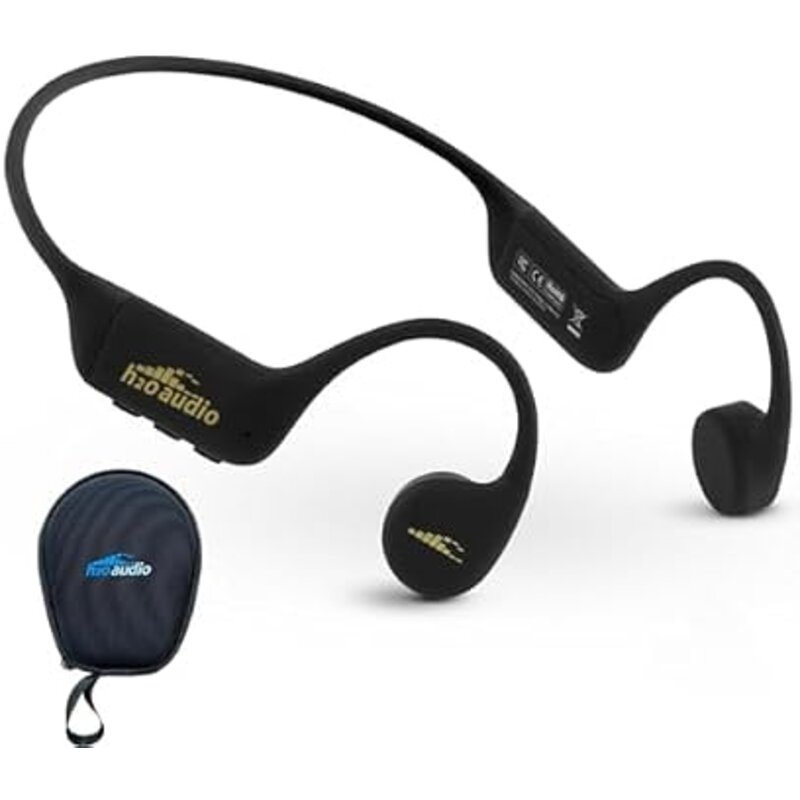
H2O Audio TRI 2 PRO Multi-Sport
Image courtesy of H2O Audio

H2O Audio TRI 2 PRO Multi-Sport

from H2O Audio
Rating
8.7 / 10
★★★★☆
Sound Quality
82%
Battery Life
84%
Water Resistance
96%
Comfort & Fit
84%
Value
82%

H2O Audio has focused on waterproof audio for years, and the H2O Audio TRI 2 PRO is designed for athletes who swim, bike and run in the same session. It uses Bluetooth 5.3 on land and switches to an onboard MP3 mode for swimming, so you do not need a phone near the water.

Its IPX8 rating is specified for submersion up to 12 feet, the deepest rating in this guide. Battery life is rated at nine hours on Bluetooth and six in MP3 mode, and it supports MP3, M4A, WMA and FLAC files.

The standout feature is Playlist+. Instead of dragging files onto the device, the companion app can record audio you stream over Bluetooth and save a copy to the 8GB memory, about 2,000 songs, for later playback underwater. A hard shell case, swim earplugs and a USB cable come in the box, and H2O Audio's Go Beyond Promise covers the set for up to one year.

Storage is a quarter of the OpenSwim Pro's 32GB, and buyer feedback places land sound slightly behind the Shokz models, including the OpenRun Pro 2. If you rarely swim, a dedicated running model will sound fuller, but for triathletes and open-water swimmers it covers all three legs.


Pros
  • IPX8 rating for submersion up to 12 feet
  • Playlist+ simplifies getting audio onto the device
  • 8GB onboard storage, about 2,000 songs
  • Bluetooth 5.3 for land training and calls
  • Supports MP3, M4A, WMA and FLAC files
  • Hard shell case and earplugs included
Cons
  • 8GB storage is smaller than the OpenSwim Pro's 32GB
  • Land audio trails the top Shokz models
  • 9-hour Bluetooth rating trails the OpenRun Pro 2's 12 hours
  • Product protection runs up to one year, shorter than Shokz's two years
PICK #5
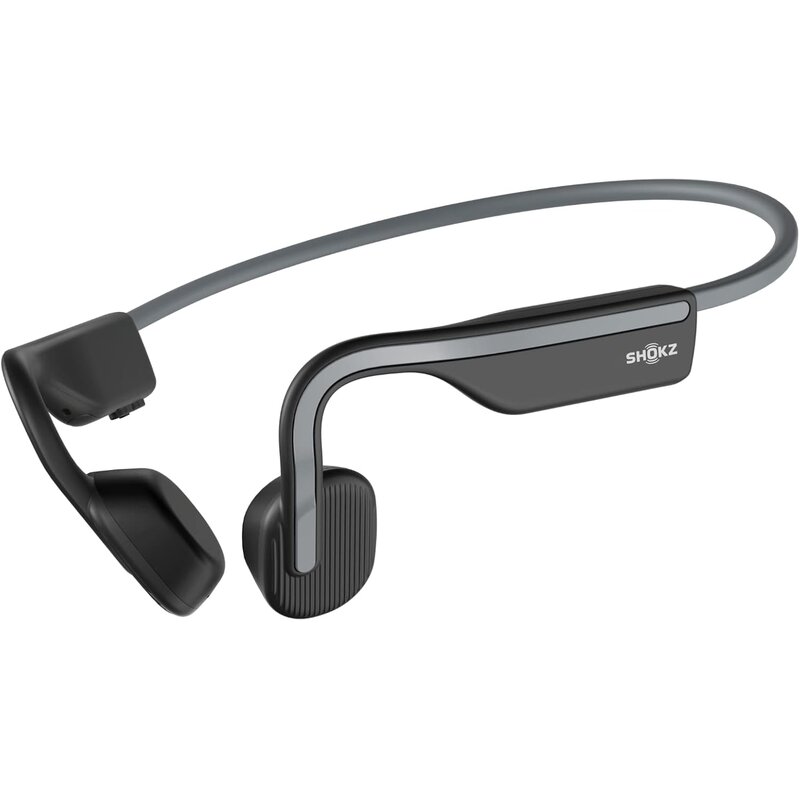
Shokz OpenMove
Image courtesy of Shokz

Shokz OpenMove

from Shokz
Rating
8.4 / 10
★★★★☆
Sound Quality
78%
Battery Life
72%
Water Resistance
75%
Comfort & Fit
86%
Value
95%

The Shokz OpenMove is Shokz's entry-level model and the easiest way to find out whether bone conduction suits you. It uses the same basic wraparound design as the brand's pricier sets, with a titanium frame that keeps your ears open to traffic and conversation.

At 29 grams it is light enough for long walks, commutes and casual runs, and the IP55 rating handles sweat and light rain. Bluetooth 5.1 covers podcasts, music and calls without anything in the ear canal. For people who find earbuds uncomfortable, that alone can be a reason to try it.

Battery life is rated at six hours, about half that of the OpenRun Pro 2 and the shortest in this lineup, and a full charge takes around two hours over standard USB-C. Shokz still includes its two-year warranty, which is unusually generous at this level. Six hours is enough for daily workouts if you charge every couple of days.

The compromises show in audio and fit. Bass is lighter than on the dual-driver OpenRun Pro 2, and the OpenMove comes in one size, so people with smaller heads sometimes report a looser fit at the back. Shokz positions it for lighter activities rather than intense interval training, and it lacks the safety lights of the Wing and the swim modes of the OpenSwim Pro.


Pros
  • Most affordable entry point into Shokz's lineup
  • Lightweight at 29 grams
  • Standard USB-C charging
  • IP55 sweat and rain resistance
  • Two-year warranty
Cons
  • Shortest battery life here at 6 hours
  • Full charge takes around two hours
  • Single size can feel loose on smaller heads
  • Lighter bass than premium models
  • Positioned for lighter activities, not intense interval training

❓ What Are Bone Conduction Headphones

Bone conduction headphones are open-ear headsets that send sound through the cheekbones instead of into the ear canal. Small transducers rest just in front of each ear and vibrate gently, and those vibrations carry audio to the inner ear while the ear itself stays uncovered.

Because nothing sits in or over the ear, you keep situational awareness: traffic, voices and other people on a trail remain audible alongside music or a podcast. The trade-off is bass and isolation, which are weaker than with sealed earbuds, and some sound can leak out at high volume.

Most models use a flexible titanium or plastic band that wraps behind the head and hooks over the ears, which keeps them stable during running and cycling. Bluetooth versions cover everyday listening and calls, while dedicated swimming models add waterproofing and built-in storage for MP3 files, since Bluetooth does not travel well underwater.

Runners, cyclists, hikers and swimmers are the main users, along with people who find earbuds uncomfortable, office workers who want to hear colleagues, and anyone who prefers to stay aware of their surroundings while listening. Many people also keep a pair for walking the dog or commuting on foot.

⭐ Benefits of Bone Conduction Headphones

Things To Consider When Choosing the Best Bone Conduction Headphones

What To Avoid When Choosing Bone Conduction Headphones

Discover Top Bone Conduction Headphones
Owen Carter
Owen Carter – Research Specialist
Owen Carter is a research specialist at CompareLoft. He builds each guide by comparing manufacturer specifications, safety listings, warranty terms and patterns in verified buyer reviews. CompareLoft does not lab-test products; scores are editorial judgments based on that research.