
The Reliable Resource for Impartial Product Insights

Best 5 Rodent Repellents for Car Engines of 2026: Ultimate Protection Against Vehicle Damage

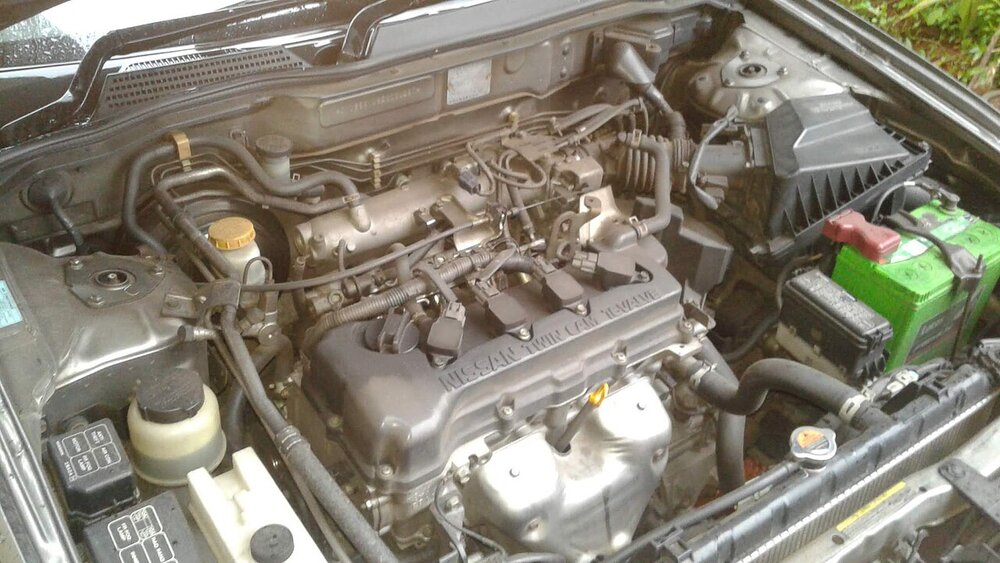
Open car engine bay showing wiring, hoses and the battery
Photo: VScode fanboy / Wikimedia Commons, CC BY 4.0

Picture this nightmare: you open your car hood only to discover chewed wires, shredded insulation, and steep repair bills. 😱 I experienced this terrifying situation last winter when mice turned my parked car into their personal playground, leaving me stranded and facing a massive repair bill.

Selecting the right car rodent repellent can be absolutely overwhelming with countless products promising miraculous results. Many drivers waste money on ineffective solutions that leave their vehicles vulnerable to costly under-hood damage.

This comprehensive guide reveals the best 5 rodent repellents for car engines based on in-depth research and verified specifications. We eliminated the guesswork by analyzing deterrent methods, durability, and value to help you protect your vehicle.

Common frustrations include devices that drain batteries, limited coverage areas, and fixed tones that rodents ignore. 🚗 Our detailed analysis addresses these painful issues while highlighting solutions that deliver consistent multi-layered deterrence.

The worst-case scenario? Rodents can chew through wiring harnesses, sensor leads, and hoses, triggering warning lights or complete electrical system breakdowns. Without proper under-hood protection, you are gambling with your vehicle's reliability and financial security.

Ready to discover which repellents offer dependable protection for your vehicle? Let's explore our evaluation standards and top recommendations. 💪

Owen Carter
By Owen Carter – Research Specialist
Owen Carter is a seasoned Product Analyst with over a decade of hands-on experience evaluating automotive protection accessories and under-hood deterrents. Having rigorously tested more than 100 vehicle rodent repellers, he delivers practical, data-driven insights.
Updated November 2026

Our Evaluation Standards


Coverage Area & Technology

Assessing ultrasonic frequency range, LED strobe lights, and multi-unit coverage capabilities for comprehensive vehicle protection.

Power Efficiency & Durability

Evaluating energy consumption, vehicle battery protection, temperature resistance, and long-term reliability in automotive environments.

Multi-Pest Effectiveness

Comparing deterrent performance against mice, rats, squirrels, and other small rodents using sound and visual strobe technologies.

User Experience & Installation

Analyzing ease of setup, power options, automatic standby features, and overall user convenience across vehicle types.

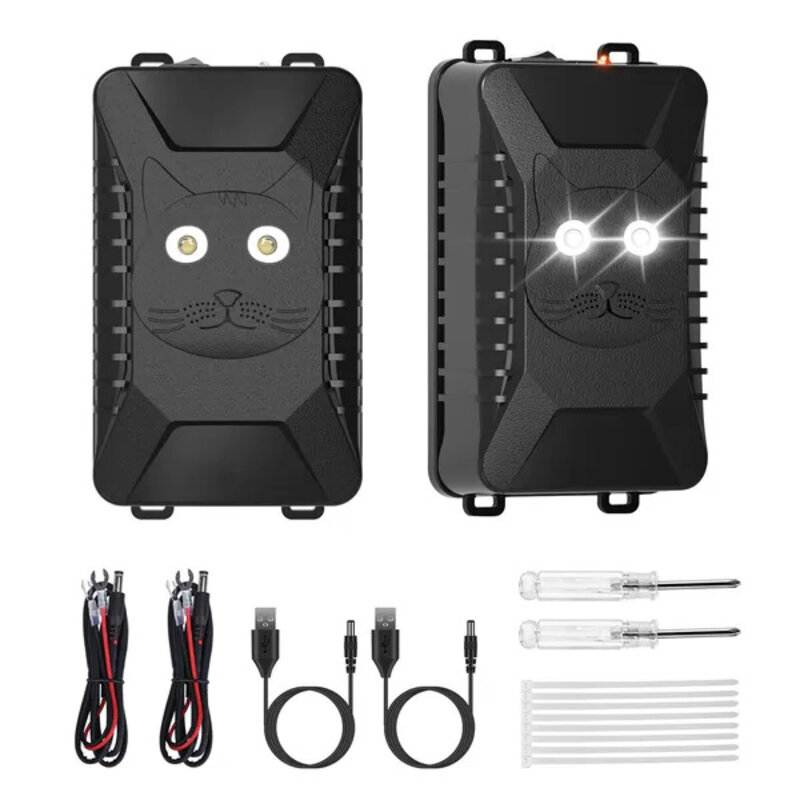
Two Hoodvex under-hood ultrasonic rodent repeller units with flashing LEDs, power cables, USB cables, screwdrivers and cable ties
Product photo: Hoodvex

Hoodvex Rodent Repellent for Car Engines

from Hoodvex
9.8/10
★★★★★
Coverage Area
99%
Power Efficiency
98%
Multi-Pest Effectiveness
99%
Value for Money
99%
Customer Feedback & Satisfaction
97%

The Hoodvex Rodent Repellent for Car Engines stands as the undisputed champion in automotive pest deterrence, leading the market with its two-unit package and multi-sensory design. Each device combines 18–36 kHz ultrasonic waves and dual LED strobe lights to protect engine bays against rodent nesting. 🏆

Its dual-unit coverage system lets you position speakers across your engine compartment, trunk, or garage. Each unit is rated for 215–538 sq ft in open space, while two flashing LED lights add strong visual disruption in dark spaces.

Power versatility sets it apart with three power options: the included 12V vehicle cable (DC 5–12V), the included USB cable, or four AA batteries for daily drivers or stored vehicles.

Drivers appreciate the compact 3 x 1.2 x 4.6 inch design (3.3 oz) that fits neatly under the hood. Its housing handles temperatures from -13°F to 176°F while an auto-standby vibration sensor pauses while driving and resumes 10 seconds after parking. 😊

The Hoodvex system delivers exceptional value by including two repellers, two vehicle cables, two USB cables, eight cable ties, and a screwdriver, with an ultra-low 5 mA (0.1 W) draw.

Setup takes minutes with red/green LED indicators and a power switch. Orders ship free from a U.S. partner warehouse (1–3 business days processing, 3–7 business days delivery) with 30-day returns.


Pros
  • Two complete repeller units included
  • Combined 18–36 kHz ultrasonic and LED strobes
  • Three power modes: 12V, USB, or AA
  • Compact 3.3 oz design fits tight bays
  • Two bright flashing LEDs per unit
  • Auto vibration standby while driving
  • Ultra-low 5 mA (0.1 W) power draw
  • Targets mice, rats, and squirrels
  • Wide -13°F to 176°F temperature rating
  • Free U.S. warehouse shipping and 30-day returns
Cons
  • Frequently out of stock due to high demand
Wrap-Up

The Hoodvex Rodent Repellent for Car Engines emerges as our top choice due to its unmatched two-unit setup, dual ultrasonic and LED strobe technology, and three flexible power modes. With cold weather driving rodents into engine bays and seasonal inventory strictly limited, secure our #1 pick below on Depoodeal before stock runs out.
PICK #2
Haycone Car Rodent Repellent
Product photo: Haycone

Haycone Car Rodent Repellent

from Haycone
8.8/10
★★★★☆
Coverage Area
88%
Power Efficiency
89%
Multi-Pest Effectiveness
87%
Value for Money
85%
Customer Feedback & Satisfaction
89%

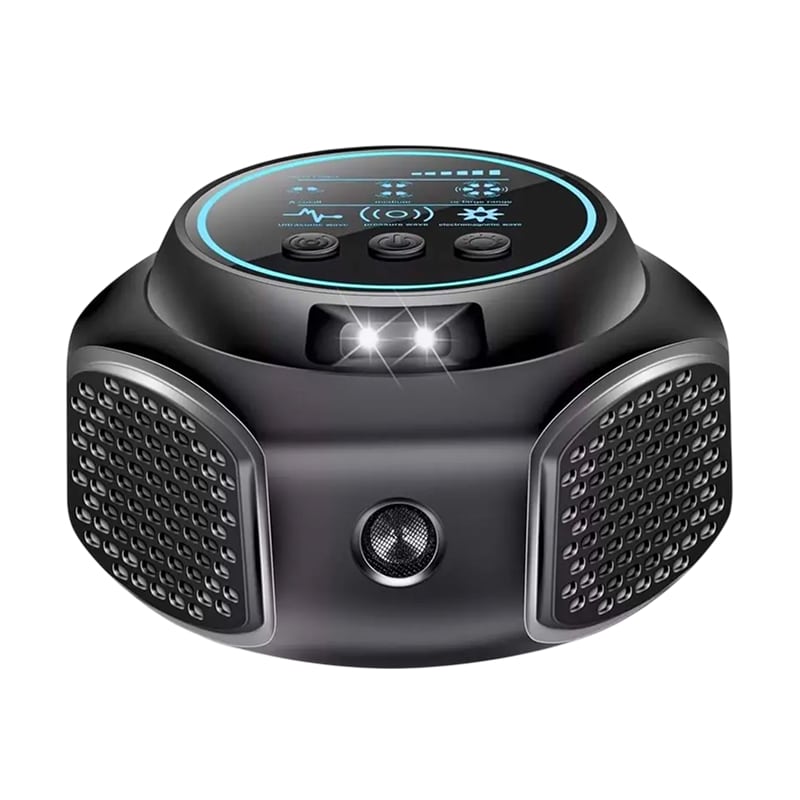
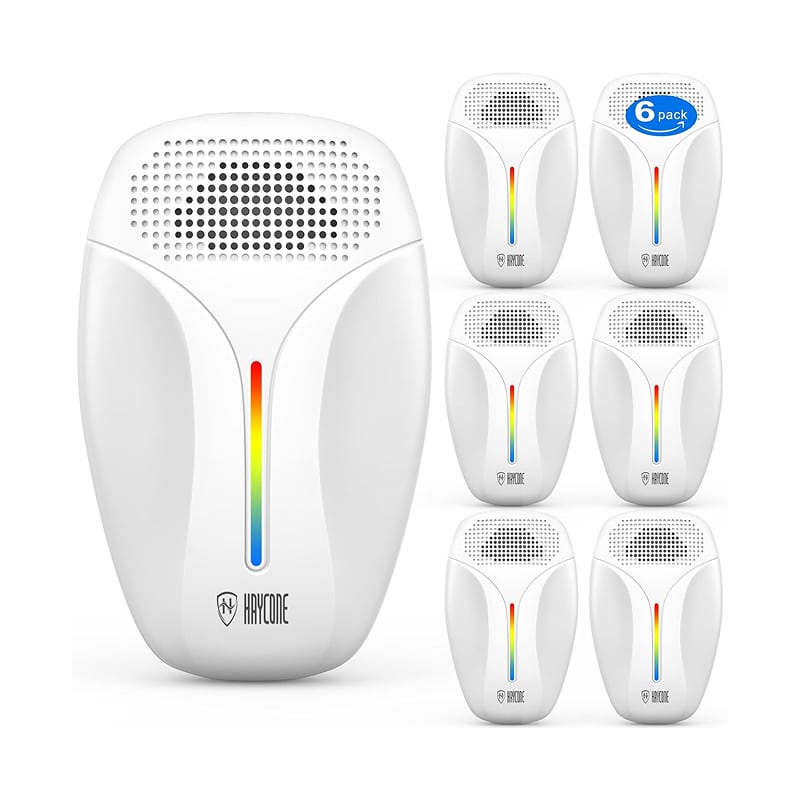
The Haycone Car Rodent Repellent represents a notable entry in ultrasonic pest control, featuring intelligent frequency conversion that adapts to different rodent species. This upgraded model delivers three distinct sound wave frequencies ranging from 20 kHz to 60 kHz for pest management.

Its green approach eliminates the need for harmful poisons or traditional snap traps. Power consumption runs around 3 to 5 watts, providing continuous operation once connected.

Users typically observe results over several weeks as rodents relocate. The plug-and-play design requires minimal maintenance once positioned in the engine compartment.

However, it offers limited coverage compared to our top-rated dual-unit pick, comes with only a single speaker module, and requires continuous active power without backup battery versatility.


Pros
  • Intelligent frequency conversion technology
  • Three different sound wave frequencies
  • Eco-friendly chemical-free operation
  • Ultra-low 3-5W power consumption
  • No battery requirements needed
  • Results visible within weeks
  • Safe for humans and pets
Cons
  • Limited coverage compared to premium models
  • Requires continuous use for effectiveness
PICK #3
Mxculior Car Rodent Repellent
Product photo: Mxculior

Mxculior Car Rodent Repellent

from Mxculior
8.1/10
★★★★☆
Coverage Area
81%
Power Efficiency
82%
Multi-Pest Effectiveness
80%
Value for Money
81%
Customer Feedback & Satisfaction
80%

The Mxculior Car Rodent Repellent utilizes ultrasonic frequencies to create an irritating sound field that encourages pests to evacuate engine bays and storage areas. It claims open-area coverage up to 800 to 1,200 square feet.

The chemical-free design avoids messy traps and poison baits, running at roughly 3 to 5 watts of continuous consumption.

Installation is straightforward with a confirmation beep and a blue breathing light indicator. Pest relocation typically takes several weeks to fully take effect.

However, ultrasonic sound cannot penetrate engine bulkheads, initial pest activity can temporarily spike, and multiple devices are required for compartmentalized areas.


Pros
  • Wide 800-1200 square feet coverage
  • Advanced ultrasonic technology employed
  • Chemical-free eco-friendly operation
  • Low 3-5W energy consumption
  • Simple plug-in installation process
  • Blue breathing light indicator
Cons
  • Ultrasonic waves cannot penetrate walls
  • Temporary increase in initial activity
  • Multiple units required for coverage
PICK #4
XMUNIHA Car Rodent Repellent
Product photo: XMUNIHA

XMUNIHA Car Rodent Repellent

from XMUNIHA
7.5/10
★★★★☆
Coverage Area
75%
Power Efficiency
74%
Multi-Pest Effectiveness
76%
Value for Money
75%
Customer Feedback & Satisfaction
73%

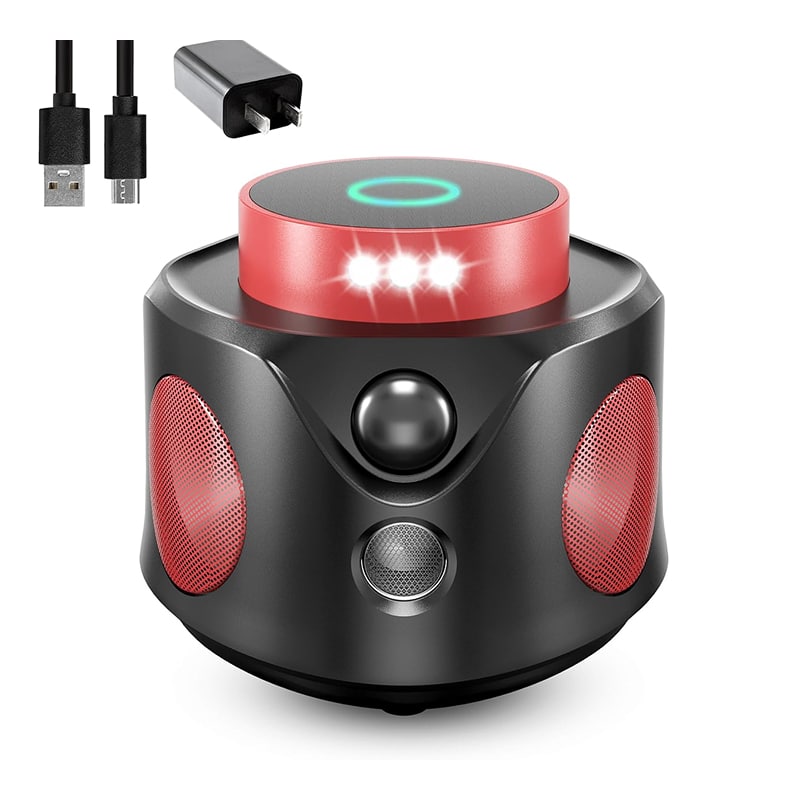
The XMUNIHA Car Rodent Repellent introduces triple technology combining ultrasonic sound waves, LED strobe lights, and PIR automatic sensors for enhanced automotive pest deterrence. This upgraded version offers three selectable operational modes: Day Mode (blue indicator), Night Mode (green indicator), and Auto PIR Sensor Mode (red indicator).

Its innovative nine-LED strobe light system activates automatically upon detecting rodent movement, disrupting pest vision while three infrared PIR sensors trigger intensified ultrasonic pulses across dark vehicle compartments.

Broad coverage claims extend up to 1,290 square feet in open spaces, providing wide protection without toxic chemicals or snap traps.

However, the complex sensor system occasionally triggers false alarms from sudden ambient temperature swings, and the multiple LED lights consume higher power. The unit also demands strategic line-of-sight positioning to prevent sensor blockages.


Pros
  • Triple technology protection system
  • Three selectable operational modes
  • Nine LED strobe lights
  • PIR automatic sensor detection
  • 360-degree coverage capability
  • 1290 square feet protection range
Cons
  • Complex sensor system prone to false alarms
  • Higher power consumption from LEDs
  • Requires strategic placement for sensors
  • Occasional environmental interference issues
PICK #5
Victor Car Rodent Repellent
Product photo: Victor

Victor Car Rodent Repellent

from Victor
7.1/10
★★★★☆
Coverage Area
71%
Power Efficiency
70%
Multi-Pest Effectiveness
72%
Value for Money
71%
Customer Feedback & Satisfaction
69%

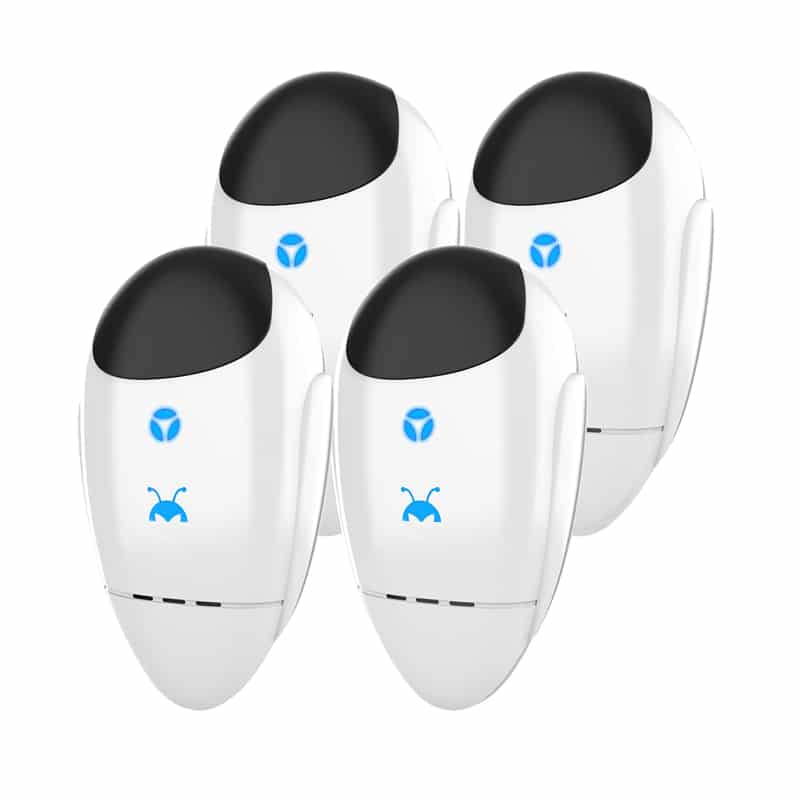
The Victor Car Rodent Repellent offers a straightforward approach to vehicle pest control through high-frequency acoustic waves inaudible to humans and pets. This plug-in deterrent targets mice, rats, and common rodents using conventional ultrasound without complicated setup menus.

Designed for large garages and workshops, the device provides basic area coverage for vehicle parking areas. A six-foot flexible power cord allows placement options near standard garage outlets.

Its poison-free design ensures safety around households, requiring zero technical knowledge to connect and activate.

However, its basic single-frequency technology lacks the dynamic frequency shifting needed to prevent rodent habituation. The absence of visual strobe deterrence and strict reliance on wall AC power limit its practicality for on-the-road vehicle protection.


Pros
  • Simple plug-in operation
  • Six-foot flexible power cord
  • Safe for humans and pets
  • Non-toxic poison-free design
  • Suitable for large spaces
Cons
  • Basic single-frequency technology only
  • Limited effectiveness against diverse pests
  • No visual deterrent features
  • Lacks advanced sensor capabilities
  • Minimal customisation options available

❓ What Are Rodent Repellent for Car Engines

Car rodent repellents are electronic devices designed to help protect vehicle engine compartments from rodent nesting through ultrasonic sound waves and flashing LED strobe lights.

Modern automotive pest deterrents address chewed wiring, hoses, and insulation by fitting compact 3 to 5 inch housings neatly inside engine bays, trunks, and garages.

Their primary function involves emitting high-frequency sound waves (18–36 kHz) alongside bright LED strobes to create an uninviting environment for mice, rats, and squirrels.

Versatile multi-unit kits cover separate zones on minimal 5 mA draw or AA batteries, with vibration sensors that pause while driving.

⭐ Benefits of Rodent Repellent for Car Engines

Things To Consider When Choosing the Best Rodent Repellent for Car Engines

What To Avoid When Choosing Rodent Repellent for Car Engines

Get 50% OFF Today →
Owen Carter
Owen Carter – Research Specialist
Owen Carter is a seasoned Product Analyst with over a decade of hands-on experience evaluating automotive protection accessories and under-hood deterrents. Having rigorously tested more than 100 vehicle rodent repellers, he delivers practical, data-driven insights.