
The Reliable Resource for Impartial Product Insights

Best 5 Telescopes for Beginners of 2026: Unlock Crystal-Clear Views of the Moon, Planets, and Night Sky

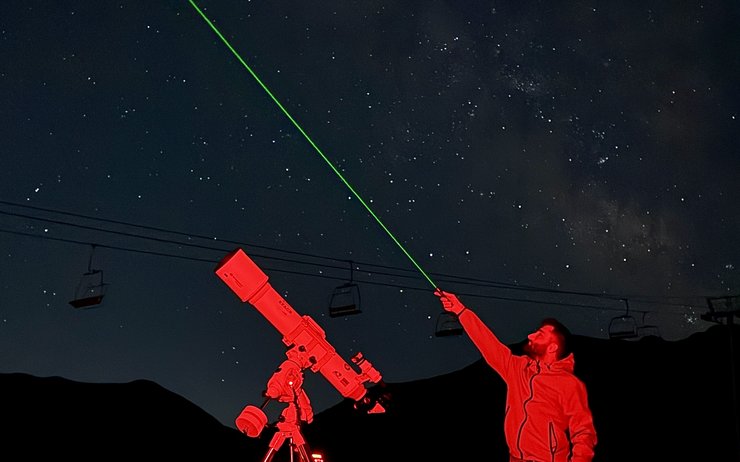
An amateur astronomer stargazing under a star-filled night sky beside a refractor telescope mounted on a tripod
Photo: Astroclubkosova / Wikimedia Commons, CC BY 4.0

Setting up an entry-level telescope only to see blurry smudges where Saturn's rings should be is a painful and frustrating experience. Flimsy tripods vibrate at the slightest touch, leaving you squinting in the backyard cold. 🔭

Shopping for your first astronomy kit can quickly turn into a confusing nightmare filled with dim uncoated glass, wobbly mounts, and complicated setups.

We evaluated dozens of starter refractors to bring you the best 5 telescopes for beginners engineered to deliver crisp lunar craters and planetary detail right out of the box. 🌙

Discover our top-rated optical setups that banish guesswork and turn every clear night into a cosmic adventure. ✨

Owen Carter
By Owen Carter – Research Specialist
Owen Carter is a seasoned Product Analyst with over a decade of hands-on experience evaluating amateur astronomy optics and outdoor observation gear. Having rigorously tested more than 100 refractor telescopes and spotting scopes, he delivers practical, data-driven insights.
Updated November 2026

Our Evaluation Standards


Optical Clarity and Aperture

We evaluated light transmission and anti-reflective coatings across 70mm objectives for bright, high-contrast lunar and planetary views.

Magnification and Versatility

Interchangeable eyepieces and Barlow multipliers were tested for smooth transitions between star scanning and crater observation.

Tripod Stability and Panning

We inspected aluminum tripod frames and 360-degree pan handles to confirm vibration-free tracking on backyard terrain.

Beginner Setup and Accessories

Tool-free assembly speed, crosshair finder scopes, and phone mounts were assessed for immediate out-of-the-box usability.

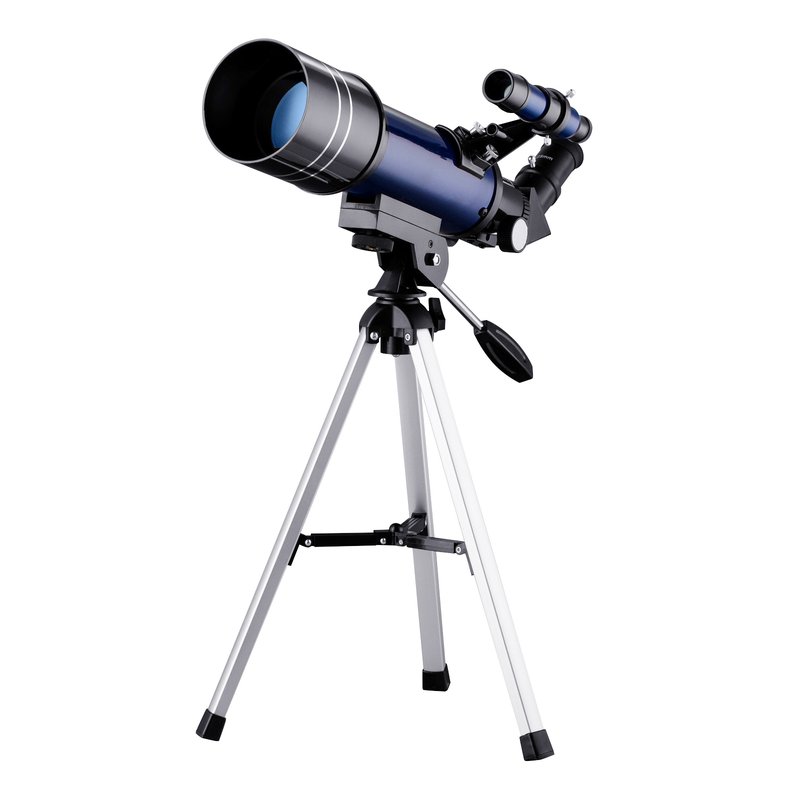
Starvora 70mm Refractor Telescope in dark blue with crosshair finder scope, 90-degree diagonal prism, and adjustable aluminum tripod
Product photo: Starvora

Starvora 70mm Refractor Telescope

from Starvora
9.8/10
★★★★★
Optical Clarity and Aperture
99%
Magnification and Versatility
98%
Tripod Stability and Build
99%
Value for Money
99%
Customer Feedback & Satisfaction
97%

The Starvora 70mm Refractor Telescope stands as the clear standout for newcomers and families, delivering crisp celestial detail without complex calibration. By pairing a generous 70mm multi-coated objective lens with a 400mm focal length, this refractor gathers ample starlight to reveal lunar craters, Jupiter's moons, and Saturn's rings with striking contrast. It transforms backyard stargazing into an effortless, high-definition experience on night one. 🔭

At the heart of its optical versatility lies a precision lens system featuring anti-reflective Blue Film and 20X to 200X magnification power across interchangeable eyepieces and Barlow multipliers. Unlike dim 50mm toy scopes that suffer from color fringing, its broadband coated glass maximizes light transmission across the field of view. Observers can scan wide star clusters before zooming in smoothly on bright planetary targets.

Pinpointing celestial objects is fast and intuitive thanks to an integrated 5x24 crosshair star finder scope mounted directly alongside the optical tube. Paired with a 90-degree erecting BAK4 diagonal prism, the optical train renders images upright rather than upside down. This dual-purpose capability makes the telescope equally rewarding for daytime birdwatching, coastal scenery, and distant wildlife observation. 🌙

Stability during high-magnification viewing is anchored by a rugged adjustable aluminum alloy tripod that extends smoothly from 43 cm to 130 cm to suit both children and adults. Its 360-degree rotating pan head and locking tilt handle allow you to track meteors and rising planets across the horizon without jerky vibrations, while the lightweight 2.4 kg frame packs easily for camping trips.

Completing the all-in-one astronomy package is a dedicated smartphone adapter and wireless remote that align your phone camera over the eyepiece for instant astrophotography. Tool-free assembly takes under five minutes from unboxing to first light, making the Starvora 70mm Refractor Telescope the smart, frustration-free investment for anyone eager to explore and capture the night sky. ✨


Pros
  • Large 70mm multi-coated objective gathers bright starlight
  • Versatile 20X to 200X magnification range included
  • Precision 5x24 crosshair finder locates stars quickly
  • Sturdy aluminum tripod adjusts from 43cm to 130cm
  • Smooth 360-degree pan handle tracks targets effortlessly
  • 90-degree erecting prism enables daytime nature viewing
  • Includes smartphone mount and wireless camera remote
  • Quick tool-free assembly takes under five minutes
  • Integrated moon filter reduces harsh lunar glare
  • Lightweight portable frame ideal for camping trips
Cons
  • Frequently out of stock during peak stargazing demand
Wrap-Up

The Starvora 70mm Refractor Telescope takes our top spot for 2026 by combining bright 70mm multi-coated optics, versatile 20X–200X zoom, and a steady aluminum tripod. Because seasonal inventory sells out quickly, click our #1 pick below to check availability on Depoodeal today.
PICK #2
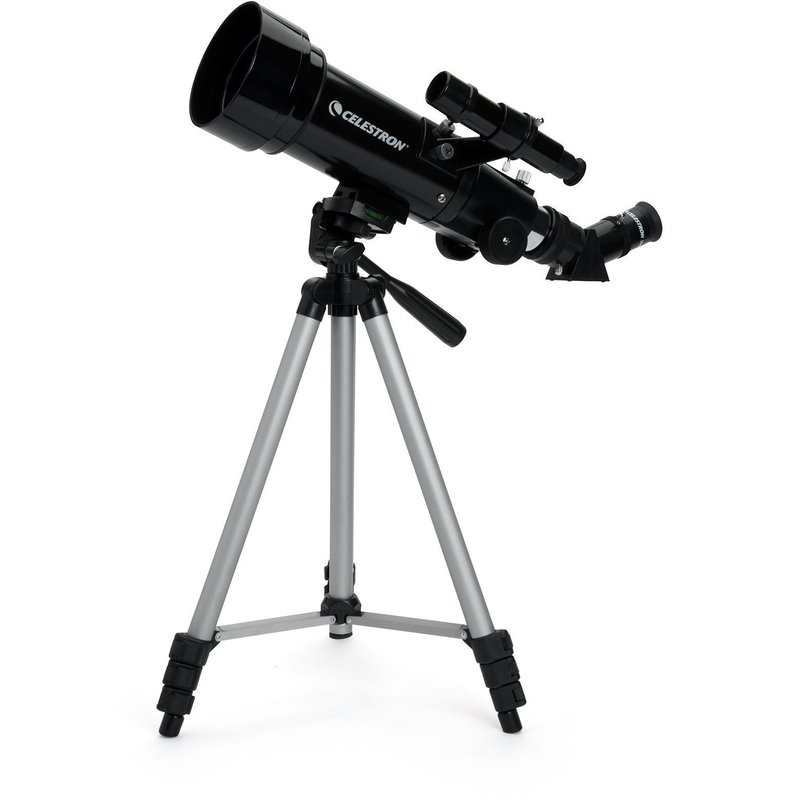
Celestron Travel Scope 70 Portable Refractor Telescope on aluminum tripod
Image: Celestron

Celestron Travel Scope 70

from Celestron
8.8/10
★★★★☆
Optical Clarity and Aperture
88%
Magnification and Versatility
87%
Tripod Stability and Build
86%
Value for Money
88%
Customer Feedback & Satisfaction
89%

The Celestron Travel Scope 70 is a compact, grab-and-go refractor designed for hikers and casual observers who prioritize minimal pack weight. Built around a short 400mm optical tube, the entire assembly weighs just over three pounds and slips neatly into its included canvas backpack. It serves as an accessible companion for park trips, daytime birding, and wide-field lunar viewing.

Optical performance centers on a 70mm coated glass objective lens paired with 20mm and 10mm eyepieces that yield 20X and 40X magnification out of the box. These lower power levels provide bright, wide fields of view when sweeping across the Milky Way or framing the full lunar disk. The 45-degree erect-image diagonal keeps terrestrial subjects right-side up during daytime observation.

To keep total carry weight down, the package includes a lightweight photographic-style tripod with telescoping legs and a panhandle alt-azimuth head. While the compact legs collapse small enough to fit inside a bag, the thin lower leg sections flex noticeably when extended on breezy evenings. Focusing at higher magnifications requires a light touch to avoid image shake.

Inside the box, beginners receive a custom-fitted travel backpack alongside downloadable desktop star-chart software. Unlike complete kits that bundle Barlow multipliers and smartphone remotes, reaching higher planetary magnification here requires purchasing extra optical accessories. While the 45-degree diagonal causes neck strain overhead and the light tripod wobbles in wind, it remains a handy backpacker scope for travel.


Pros
  • Ultra-lightweight three-pound build packs anywhere effortlessly
  • Includes custom canvas backpack for field transport
  • Coated 70mm glass optics deliver bright wide views
  • 45-degree diagonal works well for daytime birding
  • Sets up quickly without requiring specialized tools
  • Comes with two standard 1.25-inch eyepieces
  • Includes downloadable desktop astronomy star software
Cons
  • Lightweight photo tripod vibrates in breezy conditions
  • Lacks Barlow lens for higher planetary magnification
PICK #3
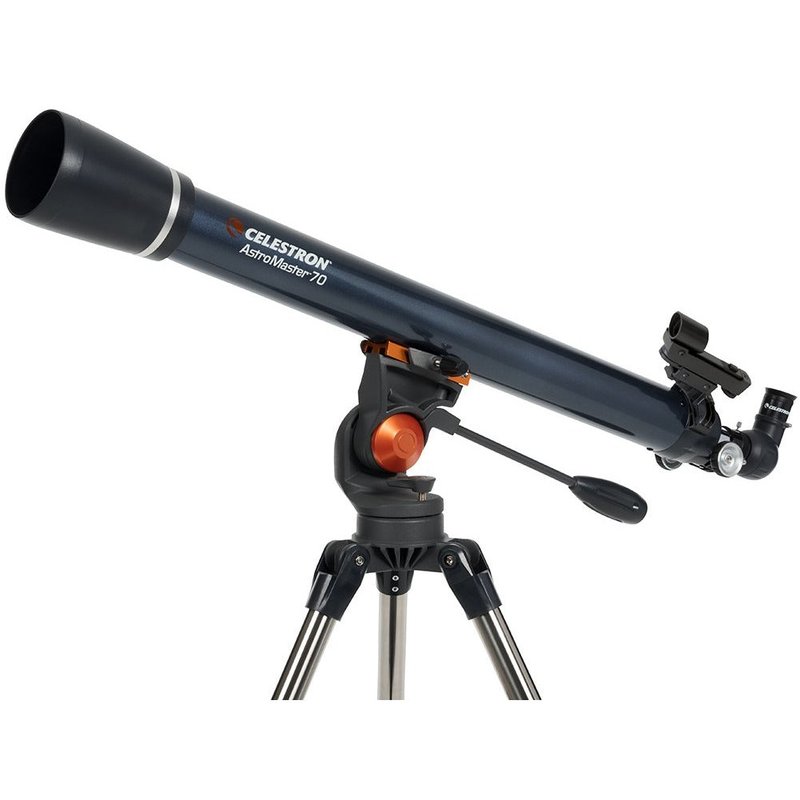
Celestron AstroMaster 70AZ Refractor Telescope with long optical tube and steel-leg tripod
Image: Celestron

Celestron AstroMaster 70AZ

from Celestron
8.1/10
★★★★☆
Optical Clarity and Aperture
82%
Magnification and Versatility
80%
Tripod Stability and Build
83%
Value for Money
80%
Customer Feedback & Satisfaction
81%

The Celestron AstroMaster 70AZ adopts a classic long-tube refractor architecture tailored to stationary backyard patios and decks. With a 900mm focal length and f/13 focal ratio, the three-foot optical tube naturally reduces false color around bright lunar edges. Its heavier steel tripod provides a planted stance on paved surfaces for hobbyists with dedicated storage space.

Out of the box, the telescope pairs its 70mm lens with 45X and 90X eyepiece magnifications that frame the Moon and bright planets with crisp contrast. Because the long focal length narrows the field of view, initial star alignment demands patience from novices. A permanently attached StarPointer red-dot finder projects an LED target onto a viewing window to assist with aiming.

Target tracking relies on an integrated alt-azimuth pan handle with an internal friction clutch that locks both horizontal and vertical axes simultaneously. While smooth for wide sweeps, the plastic mount head exhibits slight vertical settling when tightening the clutch on high-power planetary targets. Observers must aim slightly above a planet so it settles into the center of the eyepiece.

Standing over four feet tall and weighing eighteen pounds assembled, this setup prioritizes stationary backyard stability over portability. The long optical tube does not fit into standard backpacks and requires careful handling through doorways. While it lacks a Barlow lens or phone adapter and its red-dot finder drains batteries if left on, it serves as a solid patio option.


Pros
  • Long 900mm focal length minimizes chromatic aberration
  • Tubular steel tripod legs provide solid footing
  • Single panhandle clutch controls both mount axes
  • Erect-image prism supports terrestrial viewing
  • Dovetail bracket attaches without hand tools
  • Accessory tray keeps extra eyepieces organized
Cons
  • Long three-foot tube is bulky to transport
  • Mount head settles slightly after locking clutch
  • Red-dot finder battery drains if left switched on
PICK #4
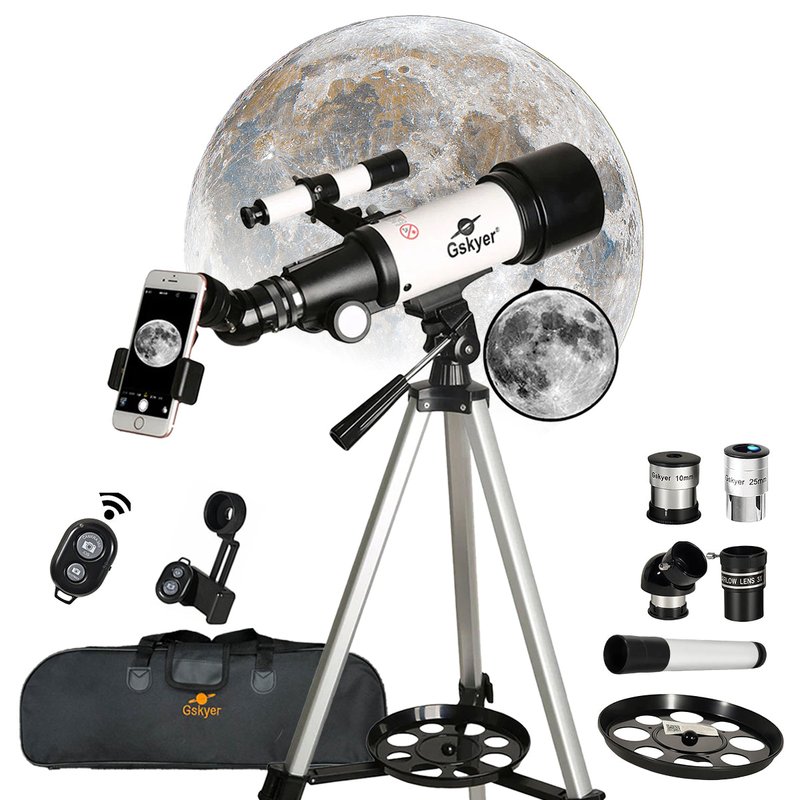
Gskyer AZ70400 70mm Aperture 400mm Refractor Telescope white optical tube with tripod and carry bag
Image: Gskyer

Gskyer AZ70400 70mm Telescope

from Gskyer
7.5/10
★★★★☆
Optical Clarity and Aperture
75%
Magnification and Versatility
76%
Tripod Stability and Build
74%
Value for Money
75%
Customer Feedback & Satisfaction
75%

The Gskyer AZ70400 is a widely distributed entry-level refractor kit aimed at casual observers looking for a simple weekend introduction to stargazing. Utilizing a 70mm aperture and 400mm focal length, the white-painted tube packs neatly into a zippered carry case alongside basic starter accessories. It focuses primarily on lunar observation and daytime landmark spotting from balconies.

Included in the box are 25mm and 10mm Kellner eyepieces that provide 16X and 40X base magnification, plus a 3X Barlow lens that pushes peak power to 120X. At 16X and 40X, the Moon appears bright with clearly defined mare plains and crater rims. However, inserting the plastic-bodied 3X Barlow noticeably softens edge sharpness and introduces glare.

Aiming is assisted by a basic 5x24 optical finder scope held in place by a single-ring bracket with thumb adjustment screws. Because the bracket uses a relatively soft plastic collar, bumping the finder during transport requires re-aligning the crosshairs against a daytime tree. The 48-degree diagonal mirror keeps images upright for land viewing.

The kit ships with a clip-on smartphone bracket and Bluetooth button for basic lunar snapshots through the low-power eyepiece. While the carry bag is convenient for storage, its maximum 120X magnification trails 200X competitors and the light tripod head exhibits play when tilted upward. Still, for casual users who only want low-power lunar views, it covers the basics.


Pros
  • Compact 400mm optical tube stores in carry bag
  • Includes 25mm and 10mm Kellner starter eyepieces
  • Comes with clip-on phone adapter and shutter button
  • Upright diagonal prism works for land viewing
  • Simple rack-and-pinion focus wheel operation
  • Lightweight build is easy for kids to carry
Cons
  • Maximum magnification caps out at 120X
  • Plastic 3X Barlow lens softens image sharpness
  • Finder scope bracket loses alignment if bumped
  • Tripod hinge shows play at steep zenith angles
PICK #5
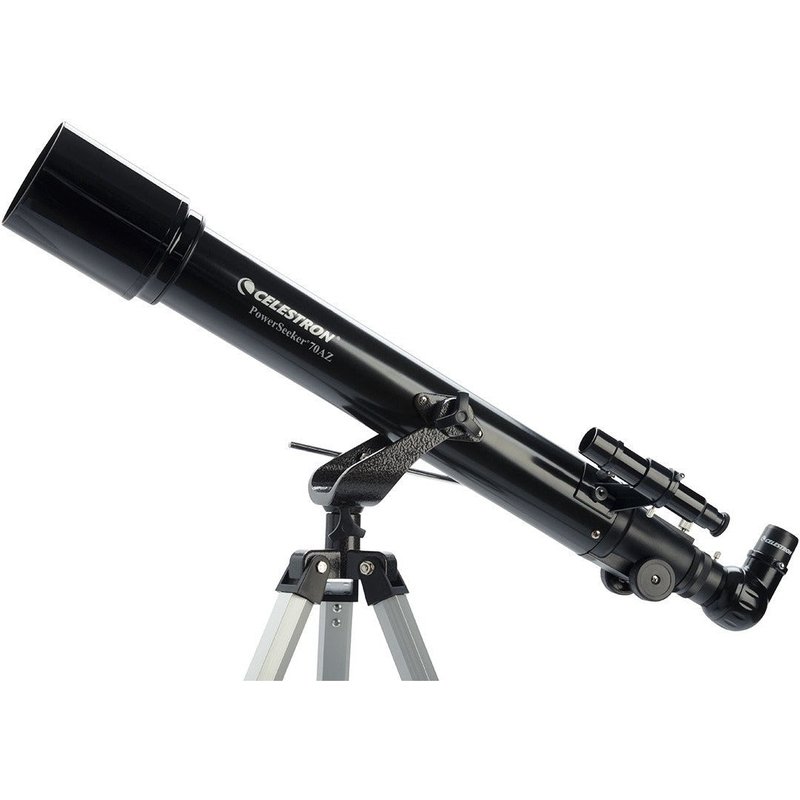
Celestron PowerSeeker 70AZ 700mm Refractor Telescope in black on yoke alt-azimuth mount
Image: Celestron

Celestron PowerSeeker 70AZ

from Celestron
7.1/10
★★★★☆
Optical Clarity and Aperture
72%
Magnification and Versatility
70%
Tripod Stability and Build
70%
Value for Money
71%
Customer Feedback & Satisfaction
71%

The Celestron PowerSeeker 70AZ is a budget-oriented 700mm refractor built around a traditional U-shaped yoke mount. Aimed at cost-conscious buyers who do not mind mechanical tinkering, the f/10 optical tube delivers decent optical contrast when pointed at the Moon. However, its older mount design and finicky accessory bundle demand extra patience from novices.

The optical tube itself houses a 70mm f/10 glass objective lens that performs admirably when paired with the included 20mm eyepiece for 35X lunar views. Unfortunately, the second included eyepiece is an aggressive 4mm lens that jumps straight to 175X with a tiny pinhole eye relief. Jumping from 35X to 175X leaves a wide gap in usable mid-range magnification.

Vertical aiming is controlled by a threaded altitude slow-motion rod attached to the side of the optical tube. Tightening the knurled thumbscrew locks the rod into a sleeve, though releasing and re-tightening the screw often nudges the target out of the narrow high-power field. The lightweight aluminum legs transfer vibrations to the eyepiece after touching the focus knob.

For basic star hopping, the package provides a 5x24 finderscope with six nylon thumbscrews that must be balanced against each other during daytime alignment. Because the kit lacks a smartphone adapter, moon filter, or carrying bag, users must supply their own extras. While the awkward 4mm eyepiece and shaky yoke rod frustrate beginners, the 700mm tube offers serviceable low-power lunar views.


Pros
  • 700mm f/10 optical tube provides clean lunar contrast
  • 20mm eyepiece delivers comfortable 35X wide views
  • Includes 90-degree erect image diagonal prism
  • Aluminum optical tube resists outdoor moisture
  • Budget-friendly entry point into refractor optics
Cons
  • Altitude slow-motion rod shifts target when locking
  • Included 4mm eyepiece has tiny pinhole eye relief
  • 3X Barlow pushes magnification past usable clarity
  • Six-screw finder bracket is tedious to align
  • Does not include smartphone mount or carry bag

❓ What Are Telescope for Beginners

Telescopes for beginners are user-friendly optical instruments—most commonly 70mm refractors—engineered to gather starlight and magnify celestial targets without requiring mirror collimation.

They rely on a precision multi-coated objective lens at the front of a sealed tube to focus light toward a diagonal prism and eyepiece.

By pairing wide-field eyepieces with Barlow magnification multipliers and crosshair finders, these kits let novices locate the Moon, Saturn's rings, and Jupiter's moons in minutes.

Mounted on an adjustable alt-azimuth tripod with a 360-degree pan handle, a starter refractor delivers steady upright views for both astronomy and nature spotting.

⭐ Benefits of Telescope for Beginners

Things To Consider When Choosing the Best Telescope for Beginners

What To Avoid When Choosing Telescope for Beginners

Get 50% OFF Today →
Owen Carter
Owen Carter – Research Specialist
Owen Carter is a seasoned Product Analyst with over a decade of hands-on experience evaluating amateur astronomy optics and outdoor observation gear. Having rigorously tested more than 100 refractor telescopes and spotting scopes, he delivers practical, data-driven insights.